Archery term
Limb
What does Limb mean?
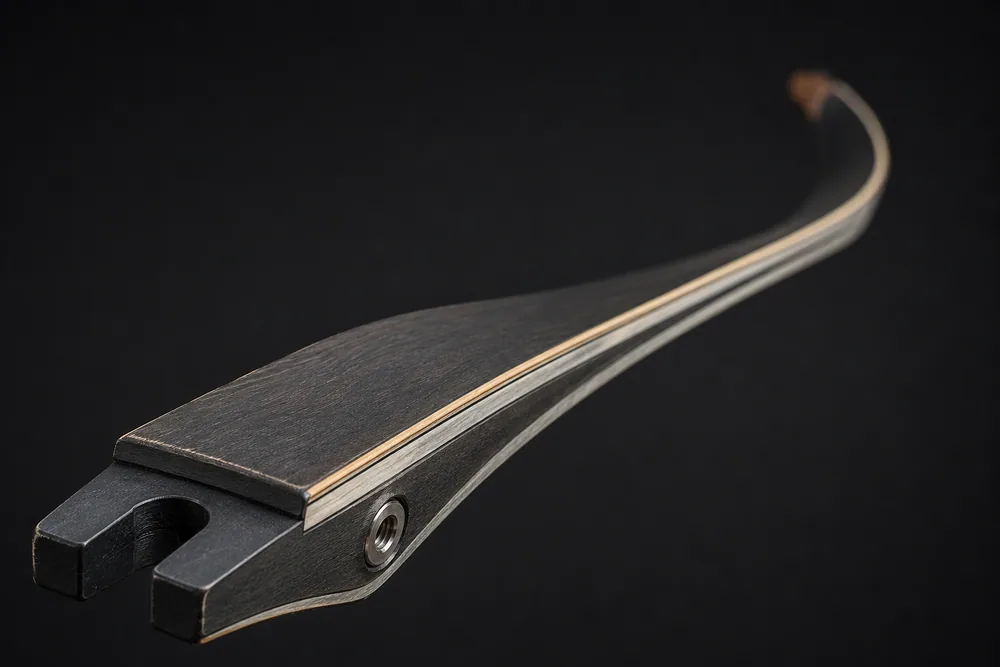
A limb is one of the two flexible arms of a bow that bend and store energy as the bow is drawn and then release that energy to propel the arrow. Bows have an upper and a lower limb, and on takedown recurves the limbs are separate parts that bolt into the riser.
Primary source for this term: World Archery Coaching Manual: Archery Glossary (Updated 2015)
Why it matters
The limbs are what store and return the energy of the shot, so their material, length, and stiffness largely determine a bow's draw weight, smoothness, and speed. On takedown recurves, archers change limbs to adjust draw weight or fine-tune performance while keeping the same riser, making limb selection central to setup.
What to check
- Match limb type and attachment standard to the exact riser.
- Check limb length and marked draw weight at your draw length.
- Confirm the maker’s maximum draw length and tuning guidance.
Useful next steps